

Vacuum Chamber & Flange CNC Machining for Semiconductor Equipment: Key Challenges & Practical Tips
By HS CNC / September 04, 2026
Introduction
Semiconductor vacuum chamber and flange CNC machining is a critical manufacturing process for high‑vacuum semiconductor equipment. Vacuum systems serve as the core foundation for wafer etching, deposition and ion implantation processes. Vacuum chambers and matching flanges keep stable internal vacuum environments for these sensitive operations.
Even tiny dimensional defects, uneven flatness or surface scratches can cause vacuum leakage. They may also trigger outgassing contamination and lead to wafer production losses. Furthermore, semiconductor‑grade vacuum hardware is far more demanding than regular precision CNC parts.
In addition to tight dimensional tolerances, manufacturers must control sealing performance, low‑outgassing properties and machining‑induced deformation. This article covers key pain points and actionable manufacturing advice for these critical components.
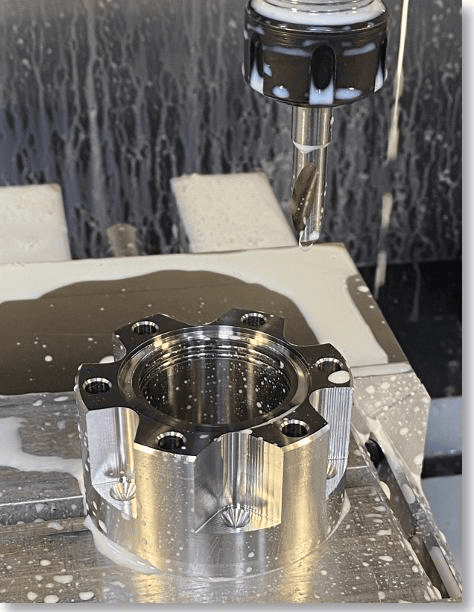
Core Challenges for Semiconductor Vacuum Chamber and Flange CNC Machining
1. Strict flatness & sealing surface requirements
Flange sealing surfaces directly determine vacuum tightness. Tool marks, scratches or poor flatness will create leakage paths under high‑vacuum conditions.
For typical semiconductor vacuum flanges, sealing faces require micron‑level flatness. Clamping distortion and improper finishing can easily ruin sealing performance. For this reason, sealing surfaces receive priority attention throughout the whole workflow.
2. Thin‑wall structure deformation risk
Most vacuum chambers adopt thin‑wall cavity designs to cut overall weight while maintaining working volume. However, thin‑wall materials are very sensitive to cutting heat, clamping force and tool vibration.
Uncontrolled post‑machining deformation distorts assembly interfaces and breaks vacuum sealing. This issue frequently causes inconsistent quality between prototype samples and mass‑production batches. Read more about reliable prototype‑to‑batch manufacturing in our article: Small‑Batch Precision CNC Machining: Bridge Your Prototype to Stable Volume Production.
3. Low‑outgassing & material selection
Inside high‑vacuum semiconductor environments, material outgassing will pollute wafers and destroy processing yields.
Common choices include 316L stainless steel, oxygen‑free copper (OFC) and specific aluminum alloys. Raw material grade, internal density and machining residues all affect outgassing performance. For reference on industry material standards, visit ASTM official database. Standard commercial stock often fails vacuum‑grade requirements even when dimensions look correct. Learn OFC vacuum‑part manufacturing details: Oxygen‑Free Copper (OFC) CNC Machining for Semiconductor Vacuum Components — Low Outgassing & Micron Tolerance.
4. High‑level cleanliness after machining
Ordinary machined parts carry cutting‑oil residue, metal chips and micro‑particles. On vacuum chamber and flange components, full particle removal and cleaning are mandatory steps.
Trapped micro‑particles inside cavities will release under vacuum and bring contamination risks. Therefore, post‑machining cleaning, protection and packaging procedures cannot be skipped.
Practical Manufacturing Tips
- Optimize clamping & cutting strategy against thin‑wall distortion
We apply low‑stress fixtures and layered cutting parameters. This approach reduces cutting heat and mechanical stress. Stress‑relief operations are arranged before finishing passes. As a result, final dimensional stability can be well guaranteed.
- Dedicated processing for flange sealing surfaces
Sealing faces go through fine finishing to eliminate sharp tool marks. Flatness inspection is performed right after machining. Meanwhile, operators avoid scratches and dents on sealing areas during part handling.
- Material verification before production
Confirm material grade and inspection certificates in advance. For vacuum applications, we screen qualified raw materials to satisfy low‑outgassing specifications. Generic industrial‑grade material will not be adopted for critical vacuum hardware.
- Controlled post‑machining treatment & cleaning
We follow vacuum‑level cleaning workflows to wash away cutting fluid and fine metal debris. Finished parts are packed inside particle‑free bags to prevent secondary contamination before delivery. For deeper guidance on surface treatment standards for vacuum hardware please visit: Surface Finishing Requirements for Semiconductor Vacuum CNC‑Machined Parts.
What to check when sourcing vacuum chamber and flange parts
- Flatness and roughness specification of sealing surfaces
- Material grade and vacuum outgassing suitability
- Wall‑thickness tolerance and anti‑deformation capacity
- Post‑processing cleaning and packaging standard
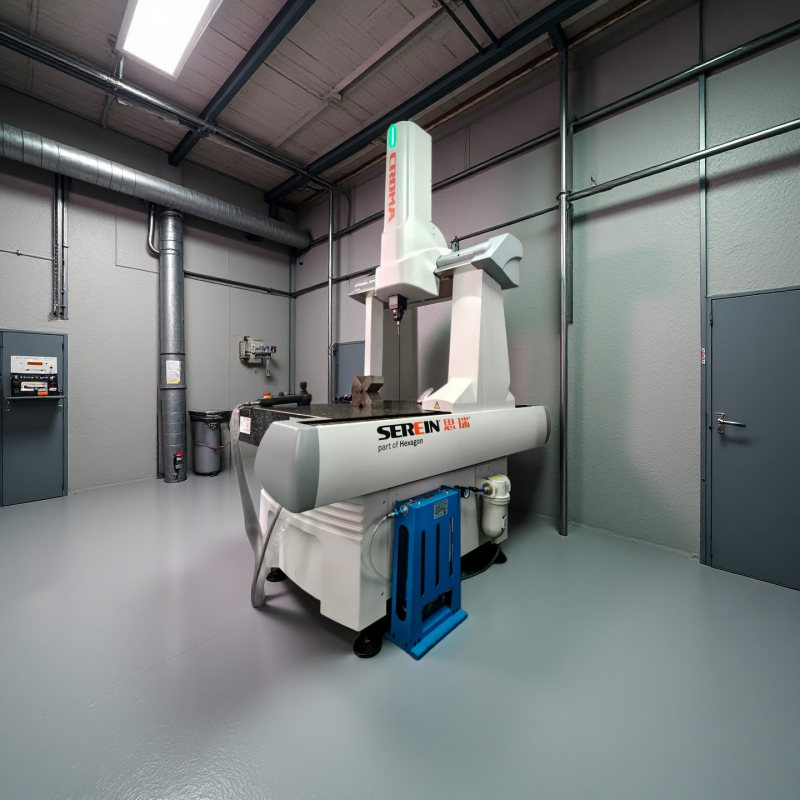
- Dimensional inspection reports for critical features
Many buyers only focus on drawing dimensions. Meanwhile, they overlook outgassing performance, flatness stability and cleaning requirements. This oversight can lead to costly failures after parts are assembled into vacuum equipment.
Conclusion
Semiconductor vacuum chamber and flange CNC machining demands comprehensive know‑how for vacuum‑grade hardware. Furthermore, this process needs to balance flatness control, thin‑wall anti‑deformation, low‑outgassing material selection and ultra‑clean post‑processing together. Vacuum chambers and flanges are mission‑critical hardware for semiconductor vacuum equipment.
Good results depend not merely on high‑precision CNC machines. It also relies on accumulated experience in stress control, sealing‑surface finishing, low‑outgassing material management and ultra‑clean post‑processing.
If you are looking for reliable supplier for semiconductor vacuum chamber and flange CNC‑machined components, send us your drawings. We can conduct drawing review, feasibility assessment and competitive quotation for your project.
Send Us Your Drawings For Quotation & Technical Review