
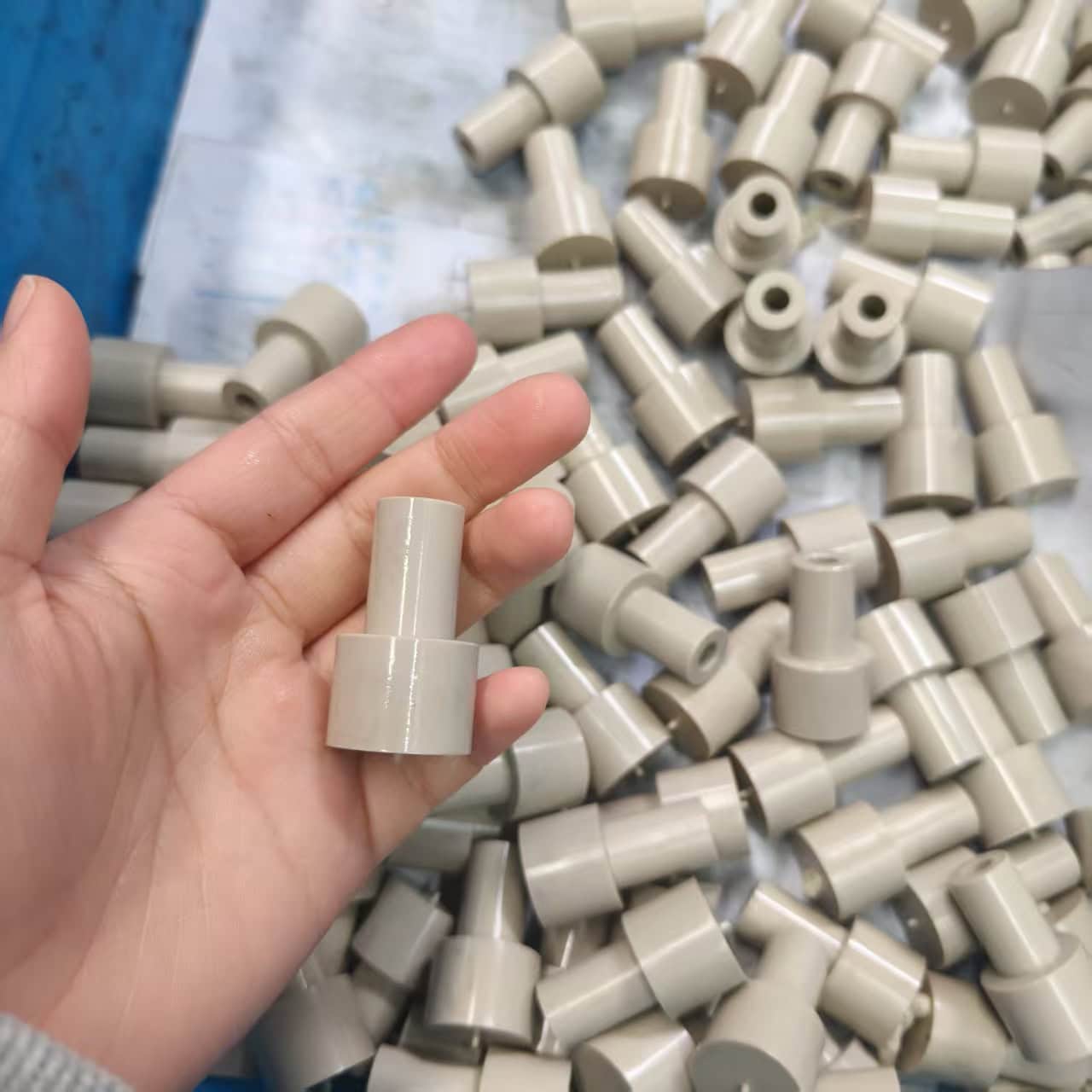
PEEK CNC machining produces high-performance custom thermoplastic precision components. PEEK (Polyetheretherketone) is one of the most popular high-performance engineering thermoplastics for precision custom machined components. Thanks to outstanding mechanical strength, high temperature resistance, chemical inertness and low outgassing, PEEK CNC machined parts are widely adopted across automation, medical equipment, semiconductor and aerospace industries.
However, PEEK is not easy to machine. It has unique thermal properties that easily cause melting, built-up edge, burrs and dimensional distortion if cutting parameters are not well controlled. In this guide, we break down PEEK core properties, main machining challenges, practical CNC tips and typical real-world applications.
1. Key Material Properties of PEEK
- Continuous operating temperature up to 250°C, short-term peak temperature can reach 315°C
- Excellent wear resistance and low friction coefficient, no need for lubrication in many scenarios
- High rigidity and tensile strength, close to many metal alloys
- Outstanding resistance to most chemicals, solvents and oils
- Low outgassing grade available for vacuum & semiconductor environments
- Biocompatible grades for medical implant and diagnostic fixtures
The downside: PEEK is sensitive to heat during cutting. Excessive cutting heat softens the workpiece, leading to deformed features and poor surface finish. You can learn more about PEEK material characteristics on Victrex, the original PEEK material manufacturer.
PEEK is often selected where plastics meet high-performance requirements, while metals such as aluminum, stainless steel and titanium remain common for higher-load applications. For comparison, see our guide on 303 vs 304 stainless steel CNC machining.
2. Main Challenges in PEEK CNC Machining
-
Heat accumulation & melting
PEEK has relatively low thermal conductivity. Heat generated during milling or turning cannot dissipate quickly. The surface will soften, smearing and melting on cutting edges, leaving rough surfaces and dimensional errors.
-
Burr formation
PEEK is ductile. Sharp corners and thin walls tend to produce stringy burrs that are hard to remove without damaging the part.
-
Internal stress & post-machining warpage
Raw PEEK rod / plate has residual stress from extrusion. After material removal, parts may slowly warp after machining.
-
Thin-wall deformation risk
Thin sections are very vulnerable to cutting force and heat, resulting in tolerance drift.
3. Practical CNC Machining Tips for PEEK
Tool selection
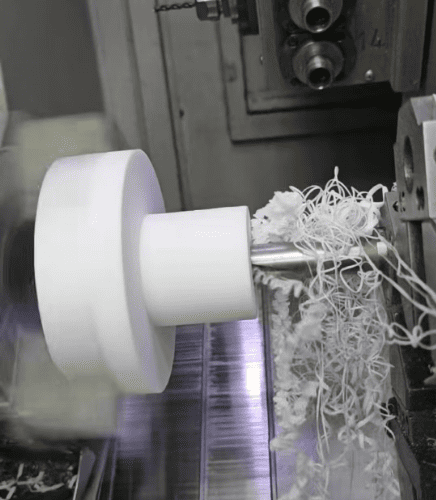
Use sharp, polished solid carbide tools. Uncoated or diamond polished cutters perform better. Avoid dull tools — dull tools create excessive heat and melt PEEK.
- Milling: High helix end mills, sharp cutting edges
- Turning: Sharp positive rake inserts
Cutting parameters
- Use high spindle speed and low feed rate
- Light depth of cut for finishing passes to reduce heat buildup
- Air cooling or compressed air blow is preferred; liquid coolant is optional but must be fully cleaned after machining to avoid contamination
Process control
- Stress relief annealing for PEEK blanks before machining for high-precision parts
- Roughing leave small stock allowance, then finish in separate operation to reduce heat accumulation
- Reduce clamping pressure: over-clamping can squeeze and deform plastic parts
Post-processing
Deburr carefully with manual fine tools or ultrasonic cleaning. Avoid heavy sanding that generates surface heat. For high-precision components, perform dimensional inspection after parts cool down fully.
4. Common Industrial Applications of CNC Machined PEEK Parts
- Industrial automation: Insulating fixtures, wear guides, bushings, gears, sliding blocks
- Semiconductor equipment: Low-outgassing spacers, vacuum isolators, wafer handling components
- Medical industry: Diagnostic instrument housings, surgical tool components, non-load-bearing implant parts (medical grade PEEK)
- Aerospace & automotive: Lightweight structural insulators, sensor supports, anti-wear bushings
5. Tolerance & Surface Finish Reference
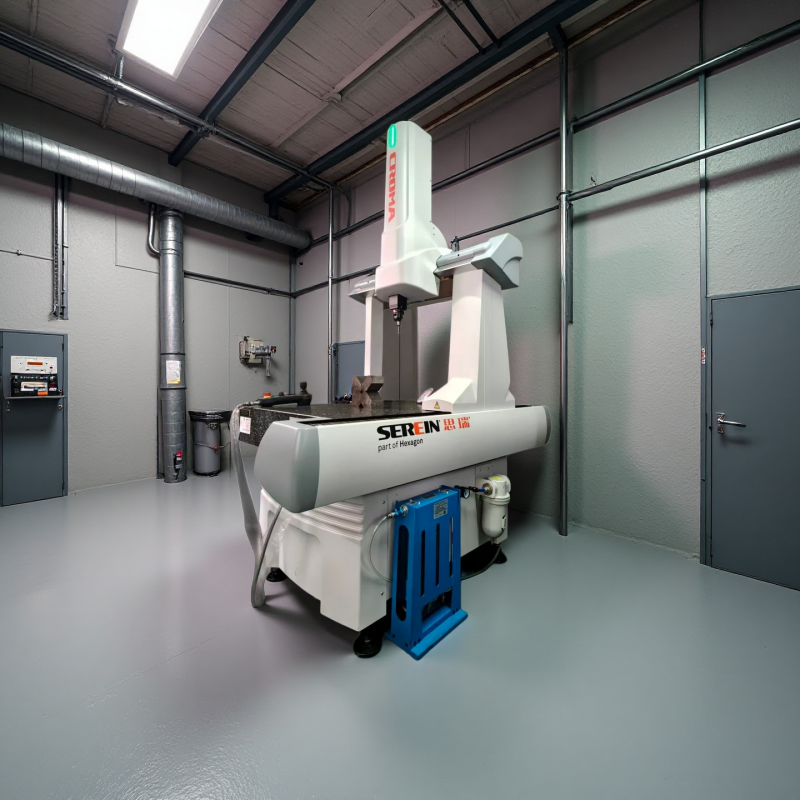
For standard PEEK CNC machining, we can hold ±0.02 mm tolerance. For ultra-precision PEEK parts, tighter tolerance is achievable with optimized process and stress-relieved raw material.
Typical surface finish Ra 0.8 μm ~ Ra 3.2 μm, depending on requirements. If you want to know how we evaluate suppliers for precision machined components, read our article: How to Evaluate a CNC Machining Supplier for Semiconductor Wafer Fab Spare Parts.
Conclusion
PEEK delivers unmatched performance for high-temperature, chemical-resistant and low-weight precision applications, but successful PEEK CNC machining relies heavily on proper tooling, heat control and process planning. Poor machining parameters will easily ruin tight-tolerance PEEK components.
Our team has rich hands-on experience machining PEEK prototypes and small batches.
If you need custom PEEK machined parts for automation, semiconductor or medical projects, send your CAD drawings and specifications. We offer prototype and small-batch precision CNC machining service for PEEK components.